

Highway to Handstand
You are standing in the doorway.
You are watching. You are trying not to look too interested. You have already told yourself at least three of the following things:
I'm too old for this.
I couldn't do it as a child.
I'll fall on my head.
It's not really for people like me.
And underneath all of that, very quietly, almost too quiet to hear:
But I really want to try.
This programme is for you.
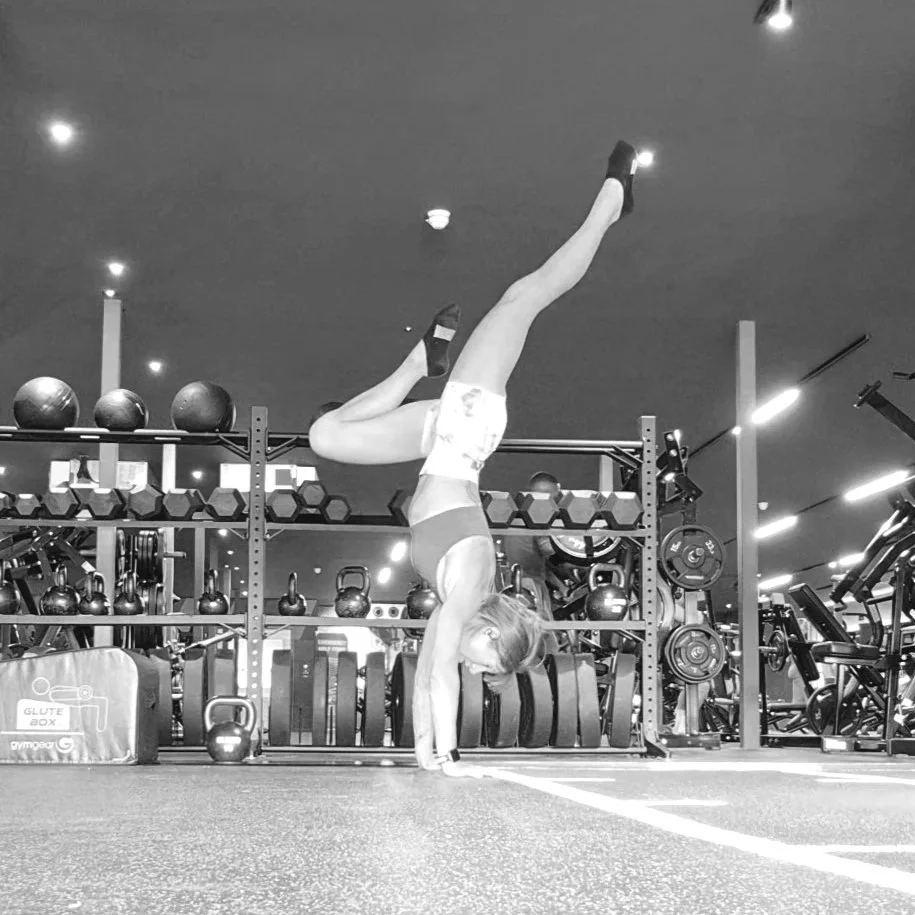
What Highway to Handstand actually is
Twelve weeks. Thirty minutes a session. Once a week minimum — though I warn you now, "just one more go" will become your unintended mantra and you will find yourself back on the mat before the week is out.
This is not a programme that throws you at a wall and hopes for the best.
It starts where you actually are — standing upright, possibly terrified, definitely curious — and takes you through every step between here and there. The physical steps. The mental ones. The nervous system ones that nobody else talks about but that make all the difference between a woman who keeps trying and a woman who quietly decides it isn't for her after all.
It isn't for her. Until it is.
How it builds
The first phase is about overcoming the fear. Physical and mental. Understanding what your body is asking when it says "I can't" and teaching it, gently and systematically, that it can.
Then we progress. Finding your way to the wall. Learning to just get there and stay. Letting that become familiar before we ask for more.
Then we polish. Arm balances that let you feel what flight feels like — the weight shift, the lift, the moment your body realises it knows how to do this. And then we take that feeling upside down.
By the end of twelve weeks you will have a wall handstand. You will also have something harder to measure and more important to keep: the knowledge that your body is capable of things you had already decided it wasn't.
One more thing
I have taught hundreds of women who stood exactly where you are standing now. Women who swore — with complete conviction — that they would never get upside down.
They got upside down.
If they can do it, why not you?
What you get
A self-contained mini app with everything you need in one place.
How-to videos for every movement. Sets and reps that are manageable — and repeatable if you want a second session in the week. Nervous system tools built into the programme because getting upside down is as much a conversation with your brain as it is with your body.
I know what it feels like to be scared to go upside down. To feel frustrated. To feel like you are not getting better when in reality you absolutely are — you just can't see it yet.
That is what I help you see.
A note on sessions
Thirty minutes if you follow the prescribed sets and reps. Easily split into two twenty minute blocks if that fits your life better — just make sure you do the warm up each time. Your nervous system needs it and so do your wrists.
Mission Pull Up
Already working on your pull up? Do you want to start? Mission Pull Up runs beautifully alongside this programme — handstands on Monday, pull ups on Thursday. Many of the accessory exercises in Mission Pull Up translate directly to handstand strength. Two programmes, one journey. You can find Mission Pull Up [here.]